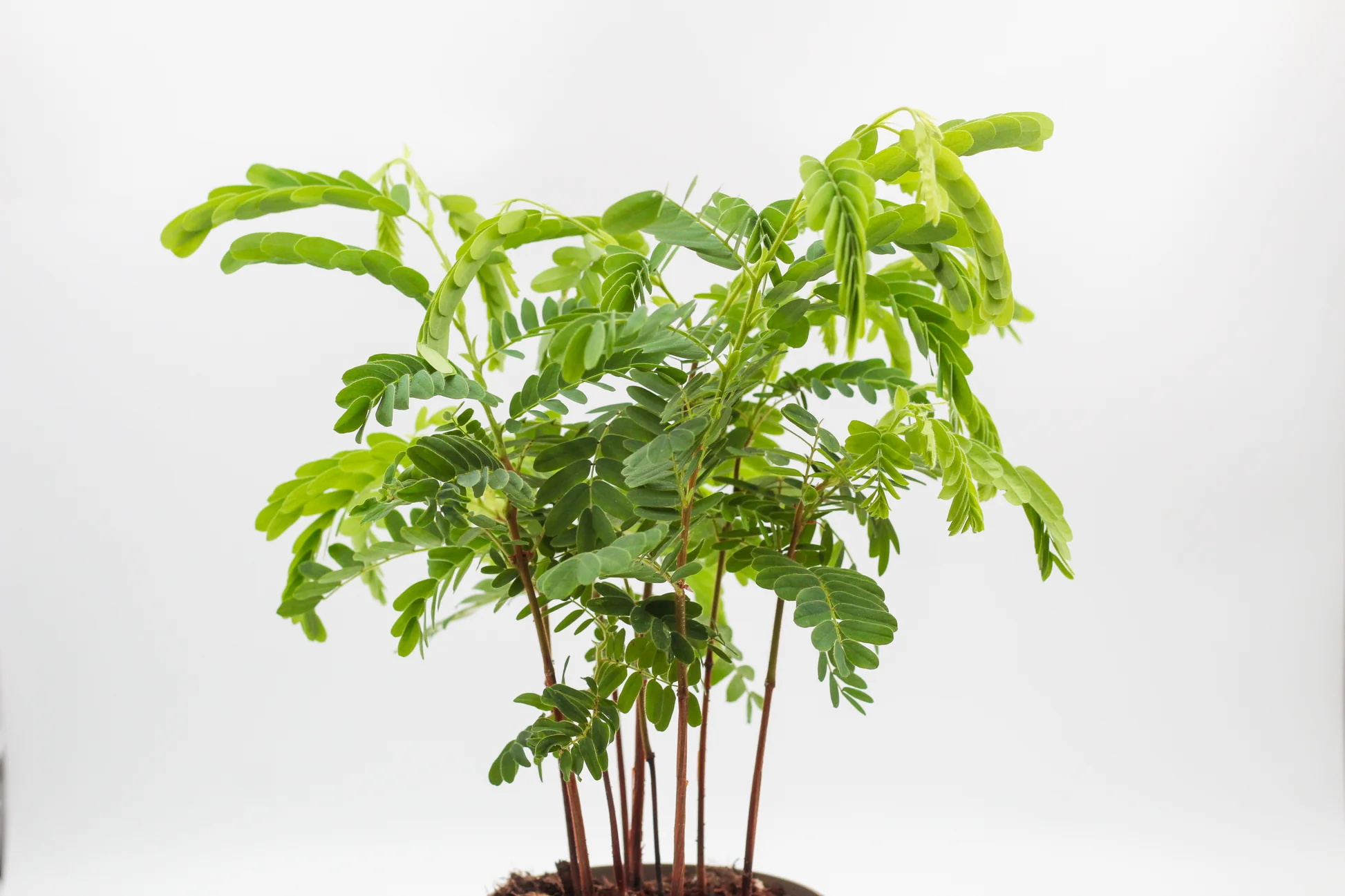
Tamarindus indica (tamarind) is a tropical leguminous tree in the Fabaceae family, grown for its feathery foliage and edible pod-like fruit. It is native to tropical Africa and has long been cultivated across South and Southeast Asia as well as other warm regions.
Light
Give tamarind the brightest position available. It performs best with several hours of direct sun daily, such as a south-facing window indoors or full sun outdoors in warm climates.
Water
Water when the top 3-5 cm of soil has dried, then water thoroughly and let excess drain away. In active growth this is often about weekly in containers. Persistent yellowing and soft stems suggest overwatering, while leaf drop and dry, curling leaflets point to underwatering.
Temperature & Humidity
Tamarind prefers warm conditions around 20-32°C (68-90°F) and should be protected from temperatures below 10°C (50°F). Medium humidity is usually sufficient indoors, but avoid very dry air from heaters and cold drafts.
Soil
Use a fast-draining mix that still holds some moisture, such as quality potting soil amended with coarse sand or perlite. Tamarind tolerates a range of pH levels but does best when roots are never left in waterlogged soil.
Toxicity
Tamarind fruit is widely eaten by people, but pet-toxicity listings are inconsistent across common houseplant references. Treat toxicity as unknown for cats and dogs and prevent pets from chewing foliage or seeds.