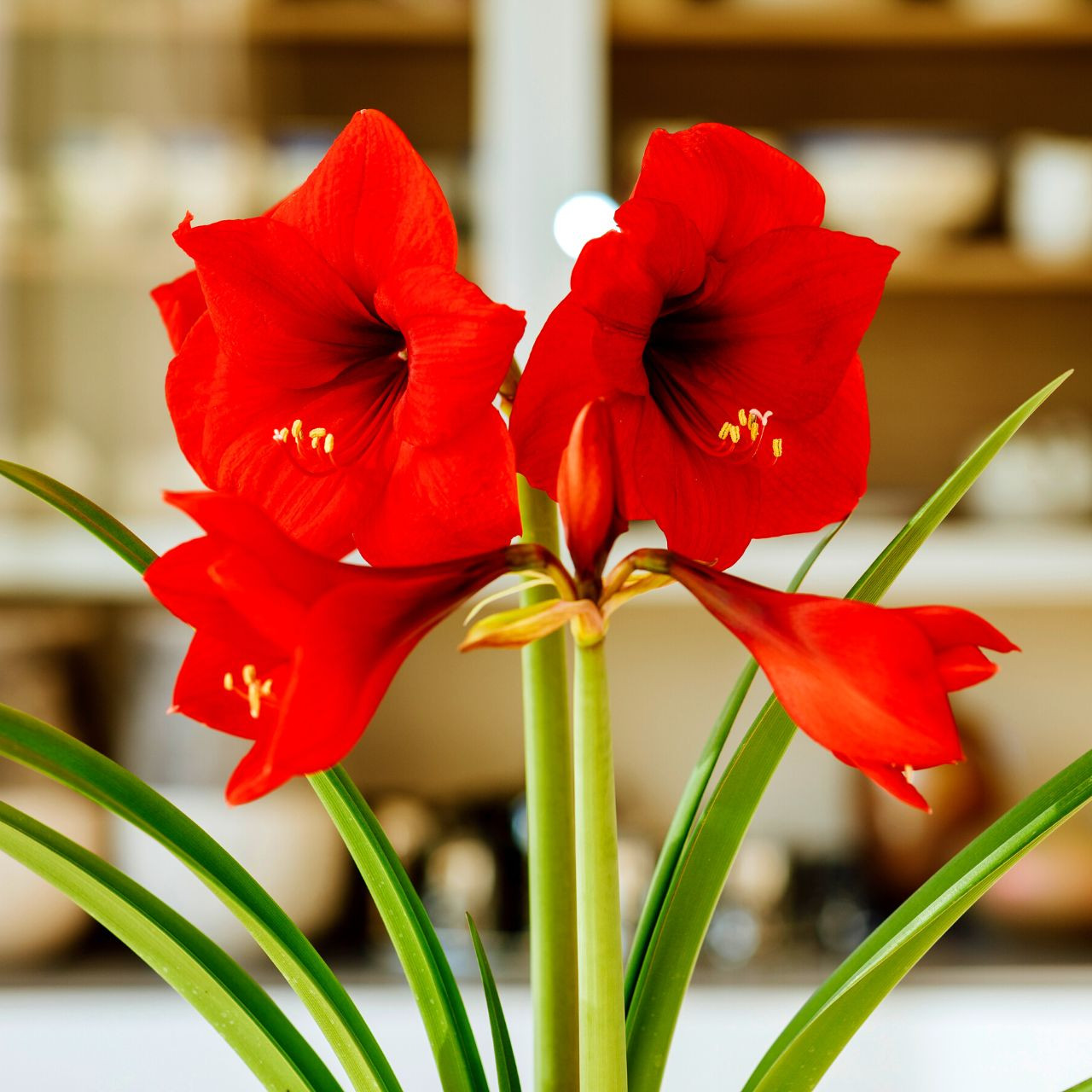
The Hippeastrum Red Lion (Hippeastrum (Galaxy Group) ‘Red Lion’) is a striking bulbous perennial in the Amaryllidaceae family, commonly known as amaryllis. Native to tropical and subtropical regions of South America, particularly Brazil, Peru, and Bolivia, this RHS Award of Garden Merit recipient is prized for its large, showy crimson flowers that brighten windowsills during winter.
Light
Thrives in bright indirect light. Place near a south- or east-facing window for best results. During active growth, at least 6 hours of bright light daily encourages strong flower stalks. After blooming, gradually introduce more direct sunlight to fuel the bulb for next season’s flowers. Too little light produces weak, elongated stems.
Water
Water sparingly after planting until active growth appears, then water regularly, keeping soil moist but not waterlogged. Typically once a week during the growing and flowering season. Allow the top 2-3 cm of soil to dry between waterings. Reduce watering after flowering as leaves die back, and keep completely dry during the 8-10 week dormancy period. Overwatering causes bulb rot.
Temperature & Humidity
Prefers 18-22°C (65-72°F) during active growth. To prolong blooms, keep in a cooler spot around 16-18°C (60-65°F). Avoid temperatures below 10°C (50°F). During dormancy, store at 10-13°C (50-55°F) in a cool, dark location. Average household humidity of 40-50% is sufficient; no special humidity requirements.
Soil
Use well-draining, loam-based potting compost high in organic matter. A mix of peat-free compost with added perlite works well. Plant in a pot only slightly larger than the bulb (about 2-3 cm wider), with the top third of the bulb exposed above the soil surface.
Toxicity
Toxic to cats, dogs, and horses. All parts of the plant contain lycorine and other alkaloids, with the highest concentration in the bulb. Ingestion causes nausea, vomiting, diarrhoea, and excessive drooling. The sap may also irritate skin. Keep well out of reach of pets and children.